Buy 3dlab.eu ?
We are moving the project
3dlab.eu .
Are you interested in purchasing the domain
3dlab.eu ?
domain@kv-gmbh.de · 0541-91531010
Buy 3dlab.eu ?
Can you make a documentary about the psychology of people, money, ambition, success, and business?
Yes, a documentary about the psychology of people, money, ambition, success, and business could be made by exploring the various psychological factors that drive individuals in their pursuit of wealth, success, and achievement. The documentary could delve into the impact of money on people's behavior, the psychological drivers of ambition and success, and the mental health implications of the high-pressure business world. By interviewing experts in psychology, business, and finance, as well as individuals with personal experiences in these areas, the documentary could provide valuable insights into the complex interplay between psychology and these aspects of life. **
How can one study forensic psychology as a subfield of psychology?
To study forensic psychology as a subfield of psychology, one can pursue a bachelor's degree in psychology to gain foundational knowledge. After completing a bachelor's degree, one can enroll in a graduate program specializing in forensic psychology to gain more in-depth knowledge and skills specific to the field. It is also beneficial to seek out internships or research opportunities in forensic psychology settings to gain practical experience and make professional connections in the field. Additionally, obtaining relevant certifications or licenses, such as becoming a licensed psychologist or forensic psychologist, can further enhance one's expertise in this subfield. **
Similar search terms for Ebury-Psychology-of-Money
Top-Angebote
Products related to Ebury-Psychology-of-Money:
-
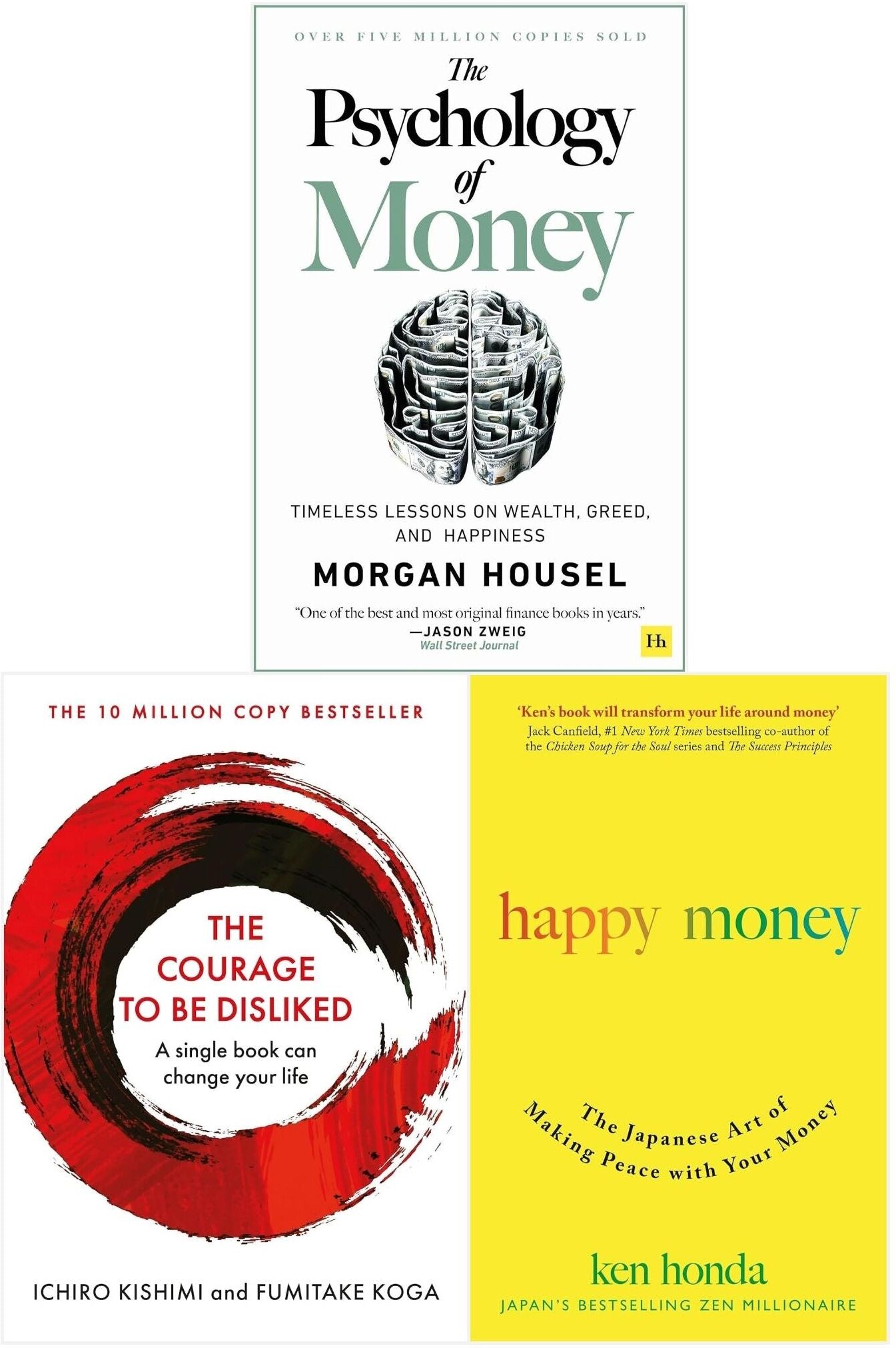
John Murray Happy Money, The Courage to be Disliked and Psychology of Money 3 Books Collection SetHappy Money Look around you - what do you see? You may discover to your surprise that the people who are most at peace with money are the ones who walk nimbly between having too little and having too much. They have found a balance between indulgence and austerity; between success and happiness; between motivation and inspiration; and between any number of other poles we tend to think of as either/or choices, but which in reality are simply posts on either side of a doorway through which we must pass. The Courage to be Disliked Stop people-pleasing and achieve true happiness. Millions have already benefited from the wisdom dispensed in The Courage to Be Disliked, its simple yet profound advice showing us how to harness our inner power to become the person we would like to be. A philosopher and a student have a discussion. Their conversation reveals a profoundly liberating way of thinking: by developing the courage to change, set healthy boundaries and resist the impulse to please others, it is possible to find genuine and lasting happiness. The Psychology of Money Doing well with money isn't necessarily about what you know. It's about how you behave. And behavior is hard to teach, even to really smart people. Money investing, personal finance, and business decisions is typically taught as a math-based field, where data and formulas tell us exactly what to do. But in the real world people don't make financial decisions on a spreadsheet. They make them at the dinner table, or in a meeting room, where personal history, your own unique view of the world, ego, pride, marketing, and odd incentives are scrambled together. In The Psychology of Money, award-winning author Morgan Housel shares 19 short stories exploring the strange ways people think about money and teaches you how to make better sense of one of life's most important topics.19,99 £*Shipping: 2,99 £Secure redirect to the provider
-
Cornerstone Bestselling Self-Development 4 Book Set – Diary of a CEO, Atomic Habits & Psychology of Money CollectionThe Diary of a CEO, Atomic Habits, The Psychology of Money, Same as Ever 4 Books Collection Set - Bestselling Authors BY - Morgan Housel, Steven Bartlett, James Clear TITLE IN THIS SET: The Diary of a CEO: The 33 Laws of Business and Life The Psychology of Money: Timeless lessons on wealth, greed, and happiness Same as Ever: Timeless Lessons on Risk, Opportunity and Living a Good Life, from the Bestselling Author of 'The Psychology of Money' Atomic Habits: the life-changing million-copy #1 bestseller34,95 £*Shipping: 2,99 £Secure redirect to the provider
-
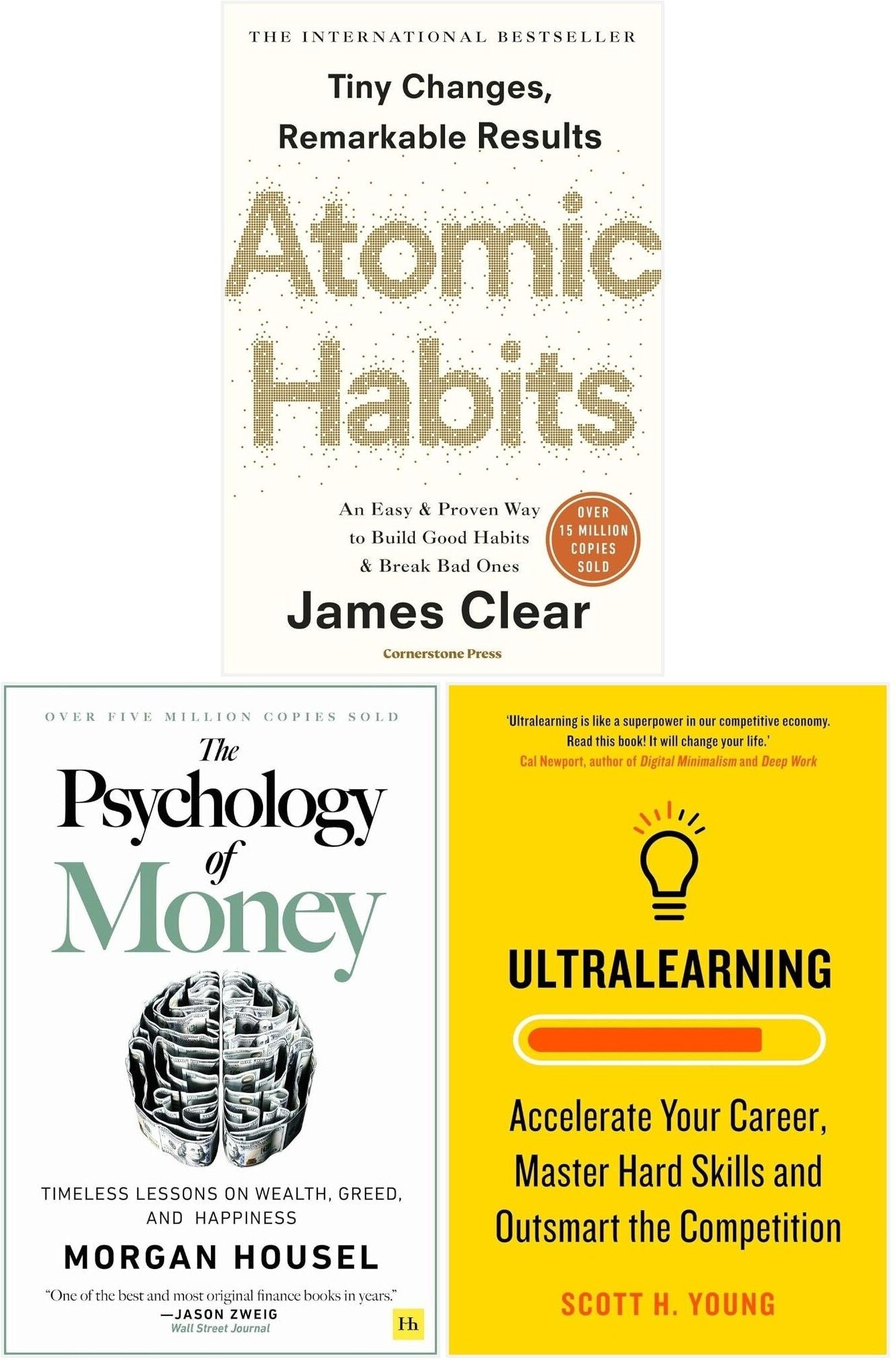
Thorsons/Cornerstone/Harriman House Ultralearning, Atomic Habits and The Psychology of Money 3 Books SetUltralearning Future-proof your career and maximize your competitive advantage by learning the skill necessary to stay relevant, reinvent yourself, and adapt to whatever the workplace throws your way in this essential guide. Faced with tumultuous economic times and rapid technological change, staying ahead in your career depends on continual learning―a lifelong mastery of new ideas, subjects, and skills. If you want to accomplish more and stand apart from everyone else, you need to become an ultralearner. Atomic Habits Transform your life with tiny changes in behaviour, starting now. People think that when you want to change your life, you need to think big. But world-renowned habits expert James Clear has discovered another way. He knows that real change comes from the compound effect of hundreds of small decisions: doing two push-ups a day, waking up five minutes early, or holding a single short phone call. The Psychology of Money Doing well with money isn't necessarily about what you know. It's about how you behave. And behavior is hard to teach, even to really smart people. Money investing, personal finance, and business decisions is typically taught as a math-based field, where data and formulas tell us exactly what to do. But in the real world people don't make financial decisions on a spreadsheet. They make them at the dinner table, or in a meeting room, where personal history, your own unique view of the world, ego, pride, marketing, and odd incentives are scrambled together.29,99 £*Shipping: 2,99 £Secure redirect to the provider
-
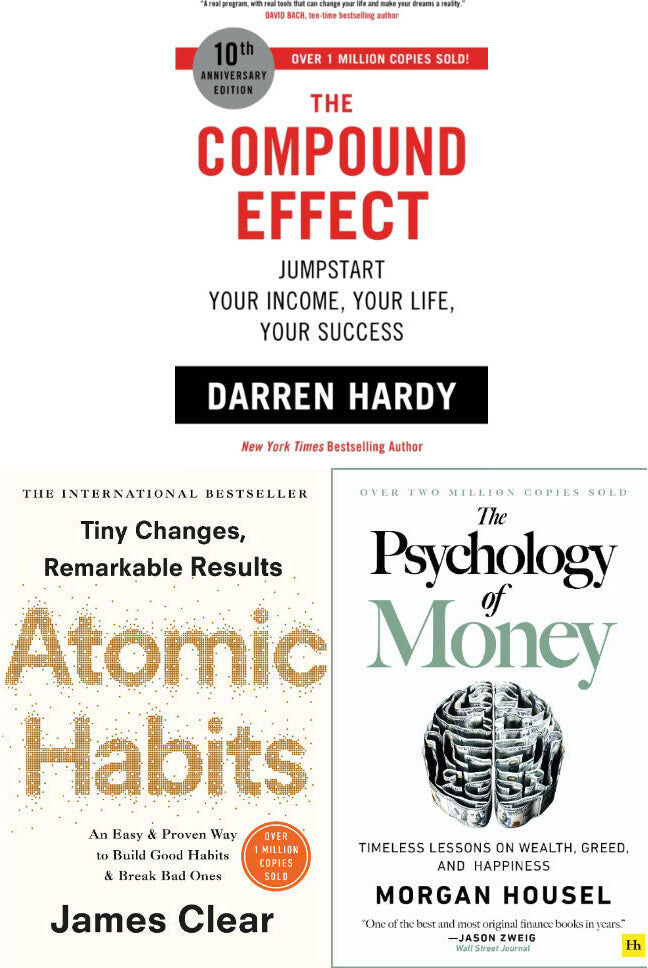
Harriman House Atomic Habits, The Compound Effect, The Psychology of Money 3 Books Collection SetAtomic Habits People think that when you want to change your life, you need to think big. But world-renowned habits expert James Clear has discovered another way. He knows that real change comes from the compound effect of hundreds of small decisions: doing two push-ups a day, waking up five minutes early, or holding a single short phone call. The Compound Effect As the central curator of the success media industry for over 25 years, author Darren Hardy has heard it all, seen it all, and tried most of it. This book reveals the core principles that drive success. The Compound Effect contains the essence of what every superachiever needs to know, practice, and master to obtain extraordinary success. Inside you will find strategies on: How to win--every time! The Psychology of Money Doing well with money isn't necessarily about what you know. It's about how you behave. And behavior is hard to teach, even to really smart people. Money investing, personal finance, and business decisions is typically taught as a math-based field, where data and formulas tell us exactly what to do. But in the real world people don't make financial decisions on a spreadsheet.22,95 £*Shipping: 2,99 £Secure redirect to the provider

-
What kind of psychology should one study in order to study psychology?
One should study general psychology in order to gain a broad understanding of the field. General psychology covers a wide range of topics including cognitive, developmental, social, and abnormal psychology, providing a foundational knowledge of the principles and theories that underpin the discipline. This will allow individuals to explore various areas of psychology and then specialize in a specific subfield based on their interests and career goals. **
-
What is the claim of scientific psychology and how does it differ from everyday psychology and popular psychology?
The claim of scientific psychology is to understand and explain human behavior and mental processes through rigorous research and empirical evidence. It differs from everyday psychology, which is based on personal experiences, observations, and common sense, and popular psychology, which often relies on anecdotal evidence, self-help books, and media portrayals. Scientific psychology aims to use systematic methods to test hypotheses and theories, leading to a more reliable and valid understanding of human behavior and mental processes. **
-
What are the exact differences between business psychology, applied psychology, and just psychology as a course of study?
Business psychology focuses on applying psychological principles and practices to the workplace, such as employee motivation, leadership, and organizational behavior. Applied psychology is a broader field that involves using psychological principles to address real-world problems in various settings, including clinical, counseling, and educational contexts. Just psychology, as a course of study, typically refers to a general psychology program that covers a wide range of psychological theories, research methods, and applications without a specific focus on business or other specialized areas. Overall, the main differences lie in the specific focus and application of psychological principles within different contexts. **
-
What does a professional orientation internship in the fields of psychology, design, or media design look like?
A professional orientation internship in the fields of psychology, design, or media design typically involves hands-on experience in a professional setting. Interns may have the opportunity to work on real projects, assist with research, or collaborate with experienced professionals in the field. They may also have the chance to observe and participate in client meetings, brainstorming sessions, and other aspects of the industry. Overall, the internship provides valuable insight into the day-to-day responsibilities and challenges of working in the chosen field, helping interns gain practical skills and knowledge for their future careers. **


What does a vocational orientation internship in the fields of psychology, design, or media design look like?
A vocational orientation internship in psychology may involve shadowing professionals, observing therapy sessions, and assisting with research projects. In design, interns may work on real client projects, create design concepts, and learn about the design process. In media design, interns may assist with video editing, graphic design, and social media content creation. Overall, these internships provide hands-on experience, exposure to the industry, and the opportunity to develop practical skills in the respective field. **
What does a career orientation internship in the fields of psychology, design, or media design look like?
A career orientation internship in psychology may involve shadowing professionals, conducting research, and assisting with client sessions to gain hands-on experience in the field. In design, interns may work on real projects, collaborate with teams, and learn about the design process from concept to completion. Media design internships could involve creating multimedia content, learning about digital tools and platforms, and gaining insight into the industry through workshops and mentorship. Overall, these internships provide valuable exposure to the day-to-day responsibilities and skills needed in these fields, helping interns make informed decisions about their future careers. **
Top-Angebote
Products related to Ebury-Psychology-of-Money:
-
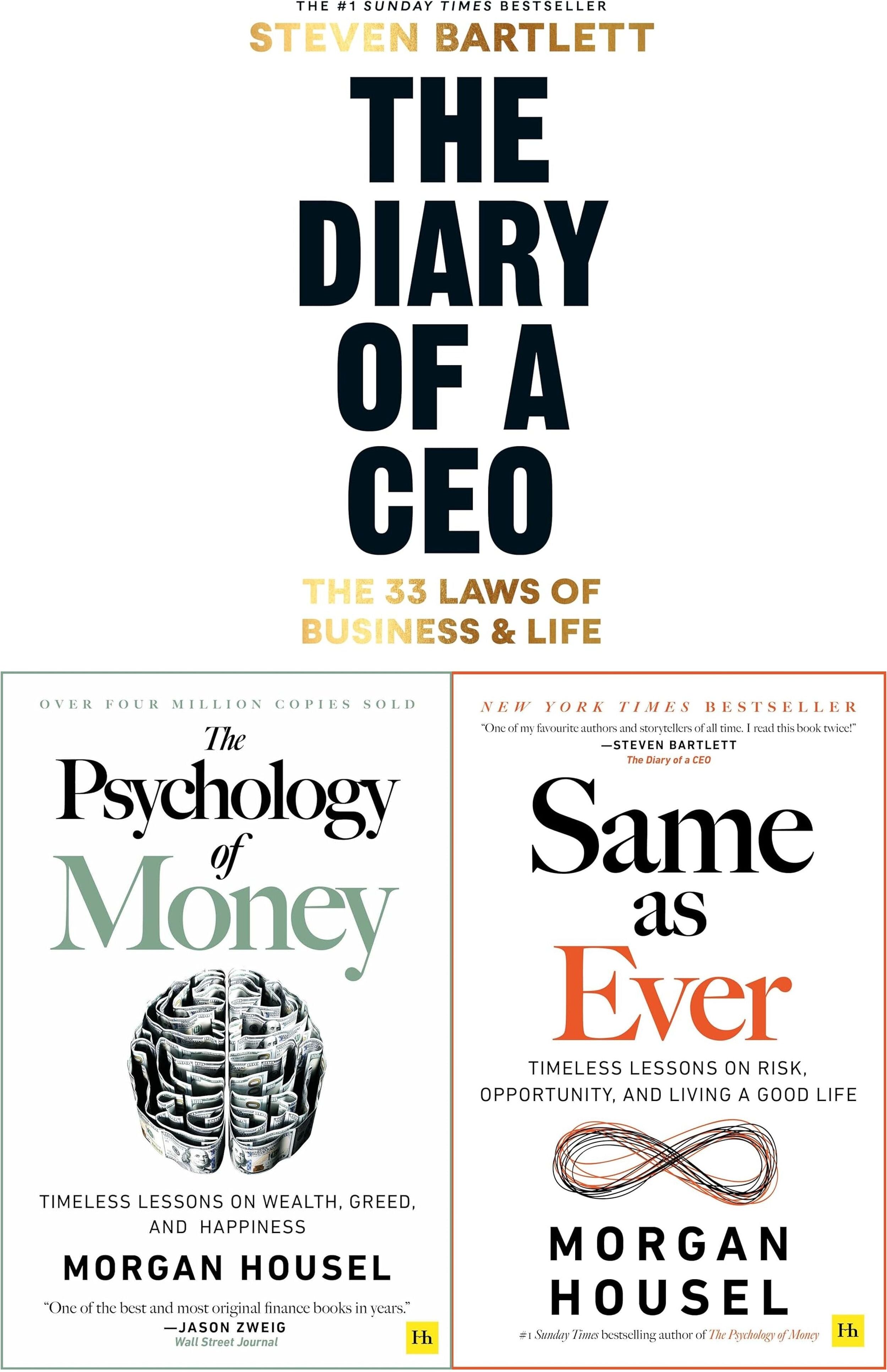
Ebury Psychology of Money, Same as Ever & Diary of a CEO 3 Book Set – Business & Mindset CollectionThe Psychology of Money, Same as Ever and The Diary of a CEO 3 Books Collection Set - Bestselling Authors BY - Morgan Housel, Steven Bartlett TITLE IN THIS SET: The Diary of a CEO: The 33 Laws of Business and Life The Psychology of Money: Timeless lessons on wealth, greed, and happiness Same as Ever: Timeless Lessons on Risk, Opportunity and Living a Good Life, from the Bestselling Author of 'The Psychology of Money'22,95 £*Shipping: 2,99 £Secure redirect to the provider
-
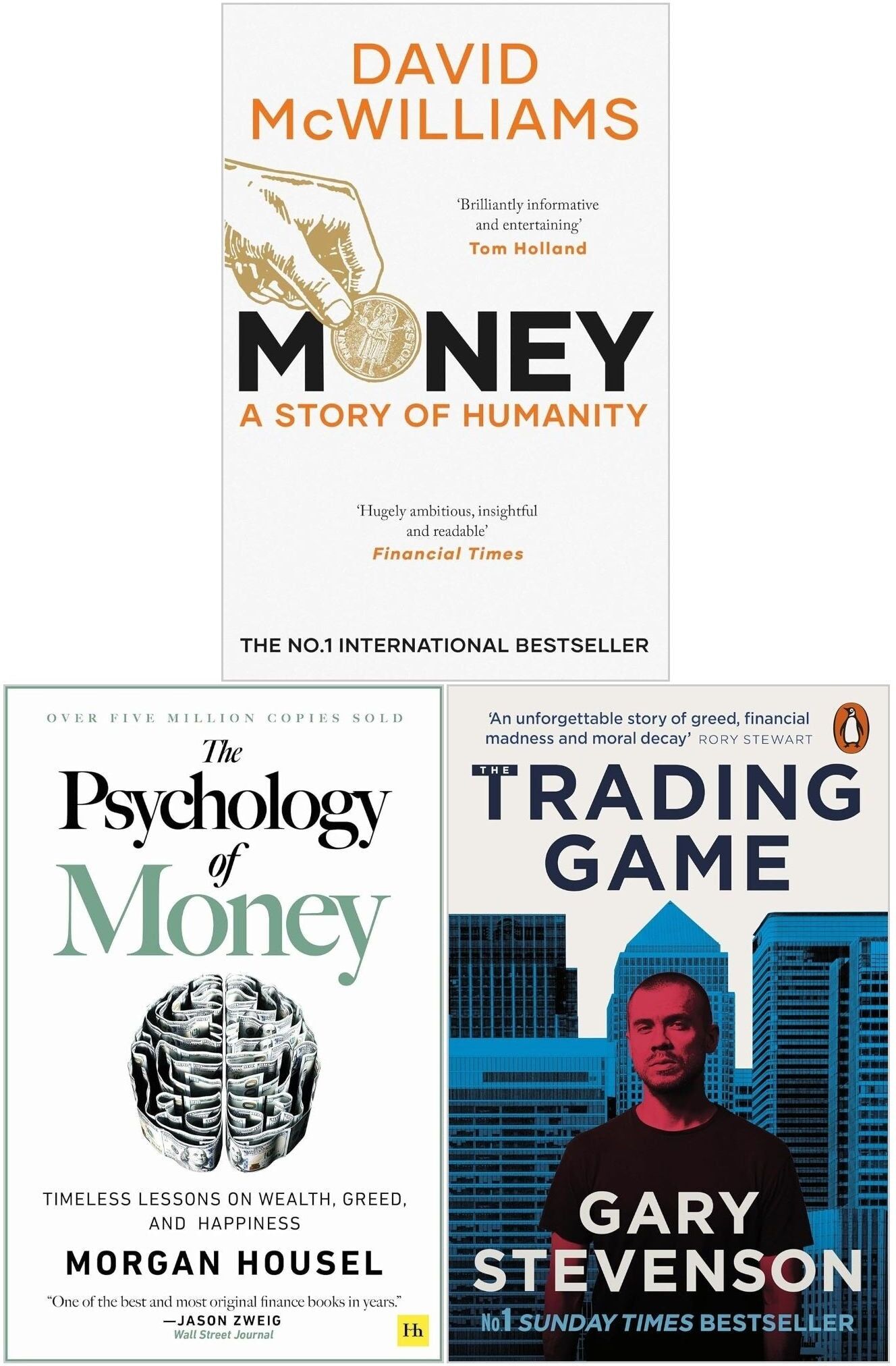
Harriman House Psychology of Money, The Trading Game and Money: A Story of Humanity 3 Books Collection SetPsychology of Money by Morgan Housel Doing well with money isn't necessarily about what you know. It's about how you behave. And behavior is hard to teach, even to really smart people. Money – investing, personal finance, and business decisions – is typically taught as a math-based field, where data and formulas tell us exactly what to do. But in the real world people don't make financial decisions on a spreadsheet. They make them at the dinner table, or in a meeting room, where personal history, your own unique view of the world, ego, pride, marketing, and odd incentives are scrambled together. The Trading Game by Gary Stevenson Ever since he was a kid, kicking broken footballs on the streets of East London in the shadow of Canary Wharf's skyscrapers, Gary wanted something better. Something a whole lot bigger. Then he won a competition run by a bank: 'The Trading Game'. The prize: a golden ticket to a new life, as the youngest trader in the whole city. A place where you could make more money than you'd ever imagined. Where your colleagues are dysfunctional maths geniuses, overfed public schoolboys and borderline psychopaths, yet they start to feel like family. Where soon you're the bank's most profitable trader, dealing in nearly a trillion dollars. A day. Where you dream of numbers in your sleep - and then stop sleeping at all. Money: A Story of Humanity by David McWilliams MONEY. The object of our desires. The engine of our genius. Humanity’s greatest invention. From clay tablets in Mesopotamia to today’s cryptocurrency, global economist David McWilliams takes us on an epic journey of innovation, disruption and transformation that is an astonishing new history of our species. The question is, over 5,000 years, have we changed money – or has money changed us?22,99 £*Shipping: 2,99 £Secure redirect to the provider
-
John Murray Happy Money, The Courage to be Disliked and Psychology of Money 3 Books Collection SetHappy Money Look around you - what do you see? You may discover to your surprise that the people who are most at peace with money are the ones who walk nimbly between having too little and having too much. They have found a balance between indulgence and austerity; between success and happiness; between motivation and inspiration; and between any number of other poles we tend to think of as either/or choices, but which in reality are simply posts on either side of a doorway through which we must pass. The Courage to be Disliked Stop people-pleasing and achieve true happiness. Millions have already benefited from the wisdom dispensed in The Courage to Be Disliked, its simple yet profound advice showing us how to harness our inner power to become the person we would like to be. A philosopher and a student have a discussion. Their conversation reveals a profoundly liberating way of thinking: by developing the courage to change, set healthy boundaries and resist the impulse to please others, it is possible to find genuine and lasting happiness. The Psychology of Money Doing well with money isn't necessarily about what you know. It's about how you behave. And behavior is hard to teach, even to really smart people. Money investing, personal finance, and business decisions is typically taught as a math-based field, where data and formulas tell us exactly what to do. But in the real world people don't make financial decisions on a spreadsheet. They make them at the dinner table, or in a meeting room, where personal history, your own unique view of the world, ego, pride, marketing, and odd incentives are scrambled together. In The Psychology of Money, award-winning author Morgan Housel shares 19 short stories exploring the strange ways people think about money and teaches you how to make better sense of one of life's most important topics.19,99 £*Shipping: 2,99 £Secure redirect to the provider
-
Cornerstone Bestselling Self-Development 4 Book Set – Diary of a CEO, Atomic Habits & Psychology of Money CollectionThe Diary of a CEO, Atomic Habits, The Psychology of Money, Same as Ever 4 Books Collection Set - Bestselling Authors BY - Morgan Housel, Steven Bartlett, James Clear TITLE IN THIS SET: The Diary of a CEO: The 33 Laws of Business and Life The Psychology of Money: Timeless lessons on wealth, greed, and happiness Same as Ever: Timeless Lessons on Risk, Opportunity and Living a Good Life, from the Bestselling Author of 'The Psychology of Money' Atomic Habits: the life-changing million-copy #1 bestseller34,95 £*Shipping: 2,99 £Secure redirect to the provider
-
Can you make a documentary about the psychology of people, money, ambition, success, and business?
Yes, a documentary about the psychology of people, money, ambition, success, and business could be made by exploring the various psychological factors that drive individuals in their pursuit of wealth, success, and achievement. The documentary could delve into the impact of money on people's behavior, the psychological drivers of ambition and success, and the mental health implications of the high-pressure business world. By interviewing experts in psychology, business, and finance, as well as individuals with personal experiences in these areas, the documentary could provide valuable insights into the complex interplay between psychology and these aspects of life. **
-
How can one study forensic psychology as a subfield of psychology?
To study forensic psychology as a subfield of psychology, one can pursue a bachelor's degree in psychology to gain foundational knowledge. After completing a bachelor's degree, one can enroll in a graduate program specializing in forensic psychology to gain more in-depth knowledge and skills specific to the field. It is also beneficial to seek out internships or research opportunities in forensic psychology settings to gain practical experience and make professional connections in the field. Additionally, obtaining relevant certifications or licenses, such as becoming a licensed psychologist or forensic psychologist, can further enhance one's expertise in this subfield. **
-
What kind of psychology should one study in order to study psychology?
One should study general psychology in order to gain a broad understanding of the field. General psychology covers a wide range of topics including cognitive, developmental, social, and abnormal psychology, providing a foundational knowledge of the principles and theories that underpin the discipline. This will allow individuals to explore various areas of psychology and then specialize in a specific subfield based on their interests and career goals. **
-
What is the claim of scientific psychology and how does it differ from everyday psychology and popular psychology?
The claim of scientific psychology is to understand and explain human behavior and mental processes through rigorous research and empirical evidence. It differs from everyday psychology, which is based on personal experiences, observations, and common sense, and popular psychology, which often relies on anecdotal evidence, self-help books, and media portrayals. Scientific psychology aims to use systematic methods to test hypotheses and theories, leading to a more reliable and valid understanding of human behavior and mental processes. **
Similar search terms for Ebury-Psychology-of-Money
-
Thorsons/Cornerstone/Harriman House Ultralearning, Atomic Habits and The Psychology of Money 3 Books SetUltralearning Future-proof your career and maximize your competitive advantage by learning the skill necessary to stay relevant, reinvent yourself, and adapt to whatever the workplace throws your way in this essential guide. Faced with tumultuous economic times and rapid technological change, staying ahead in your career depends on continual learning―a lifelong mastery of new ideas, subjects, and skills. If you want to accomplish more and stand apart from everyone else, you need to become an ultralearner. Atomic Habits Transform your life with tiny changes in behaviour, starting now. People think that when you want to change your life, you need to think big. But world-renowned habits expert James Clear has discovered another way. He knows that real change comes from the compound effect of hundreds of small decisions: doing two push-ups a day, waking up five minutes early, or holding a single short phone call. The Psychology of Money Doing well with money isn't necessarily about what you know. It's about how you behave. And behavior is hard to teach, even to really smart people. Money investing, personal finance, and business decisions is typically taught as a math-based field, where data and formulas tell us exactly what to do. But in the real world people don't make financial decisions on a spreadsheet. They make them at the dinner table, or in a meeting room, where personal history, your own unique view of the world, ego, pride, marketing, and odd incentives are scrambled together.29,99 £*Shipping: 2,99 £Secure redirect to the provider
-
Harriman House Atomic Habits, The Compound Effect, The Psychology of Money 3 Books Collection SetAtomic Habits People think that when you want to change your life, you need to think big. But world-renowned habits expert James Clear has discovered another way. He knows that real change comes from the compound effect of hundreds of small decisions: doing two push-ups a day, waking up five minutes early, or holding a single short phone call. The Compound Effect As the central curator of the success media industry for over 25 years, author Darren Hardy has heard it all, seen it all, and tried most of it. This book reveals the core principles that drive success. The Compound Effect contains the essence of what every superachiever needs to know, practice, and master to obtain extraordinary success. Inside you will find strategies on: How to win--every time! The Psychology of Money Doing well with money isn't necessarily about what you know. It's about how you behave. And behavior is hard to teach, even to really smart people. Money investing, personal finance, and business decisions is typically taught as a math-based field, where data and formulas tell us exactly what to do. But in the real world people don't make financial decisions on a spreadsheet.22,95 £*Shipping: 2,99 £Secure redirect to the provider
-
HH Rich Dad Poor Dad, Atomic Habits, The Psychology of Money 3 Books Collection SetRich Dad Poor Dad, Atomic Habits, The Psychology of Money 3 Books Collection Set by Robert T. Kiyosaki, James Clear, Morgan Housel Titles in This Set: Rich Dad Poor Dad : What the Rich Teach Their Kids About Money That the Poor and Middle Class Do Not! Rich Dad Poor Dad consistently ranks among bestsellers around the world in the categories of Personal Finance, Parenting, and Investing, has been translated into 38 languages, and has sold more than 40 million copies worldwide. Rich Dad Poor Dad is Robert's story of growing up with two dads -his real father and the father of his best friend, his rich dad - and the waysin which both men shaped his thoughts about money and investing. The bookexplodes the myth that you need to earn a high income to be rich and explainsthe difference between working for money and having your money work for you. Atomic Habits : the life-changing million-copy #1 bestseller THE PHENOMENAL INTERNATIONAL BESTSELLER: OVER 1O MILLION COPIES SOLD WORLDWIDETransform your life with tiny changes in behaviour, starting now. People think that when you want to change your life, you need to think big. But world-renowned habits expert James Clear has discovered another way. He knows that real change comes from the compound effect of hundreds of small decisions: doing two push-ups a day, waking up five minutes early, or holding a single short phone call. He calls them atomic habits. In this ground-breaking book, Clears reveals exactly how these minuscule changes can grow into such life-altering outcomes. The Psychology of Money : Timeless lessons on wealth, greed, and happiness Doing well with money isn't necessarily about what you know. It's about how you behave. And behavior is hard to teach, even to really smart people. Money-investing, personal finance, and business decisions-is typically taught as a math-based field, where data and formulas tell us exactly what to do. But in the real world people don't make financial decisions on a spreadsheet. They make them at the dinner table, or in a meeting room, where personal history, your own unique view of the world, ego, pride, marketing, and odd incentives are scrambled together. In The Psychology of Money, award-winning author Morgan Housel shares 19 short stories exploring the strange ways people think about money and teaches you how to make better sense of one of life's most important topics.24,99 £*Shipping: 2,99 £Secure redirect to the provider
-
The Psychology Of Money, The Art of Spending Money & Same as Ever by Morgan Housel 3 Books Collection Set - Non Fiction - Paperback Pan MacmillanTitles in this set: 1. Same as Ever 2. The Psychology of Money 3. The Art of Spending Money Description: Same as Ever When planning for the future we often ask, “What will the economy be doing this time next year?” Or, “What will be different ten years from now?” But forecasting is hard. The important events that will shape the future are inherently unpredictable. Instead, we should be asking a different question: What will be the same ten years from now? What will be the same one hundred years from now? Knowledge of the things that never change is more useful, and more important, than an uncertain prediction of an unknowable future. In Same As Ever, bestselling author Morgan Housel shares 24 short stories about the ways that life, behaviour, and business will always be the same. Armed with this knowledge of the unchanging, you will have a powerful new ability to think about risk, opportunity, and how to navigate the uncertainty of the future. The Psychology of Money Doing well with money isn't necessarily about what you know. It's about how you behave. And behavior is hard to teach, even to really smart people. Money investing, personal finance, and business decisions is typically taught as a math-based field, where data and formulas tell us exactly what to do. But in the real world people don't make financial decisions on a spreadsheet. They make them at the dinner table, or in a meeting room, where personal history, your own unique view of the world, ego, pride, marketing, and odd incentives are scrambled together. In The Psychology of Money, award-winning author Morgan Housel shares 19 short stories exploring the strange ways people think about money and teaches you how to make better sense of one of life's most important topics. The Art of Spending Money Can money buy happiness? Yes. Can spending it make you happier? Absolutely. Yet, many of us struggle to unlock its full potential – either by spending on things that don't bring as much joy as they should, or by avoiding investments that would truly enhance our mental well-being. In The Art of Spending Money, award-winning and global bestselling author Morgan Housel offers a refreshingly practical approach to managing wealth while finding deeper meaning and contentment. Instead of cookie-cutter financial advice, Housel provides you with psychological tools to navigate your personal relationship with money and optimise for happiness. Discover why people often mistake envy for admiration, how to align your expectations with your income, and ways to invest in future happiness while avoiding regret. Learn about the dangers of social debt and embrace the radical idea that the fastest way to build wealth is by going slow. The Art of Spending Money delves into the complexities that surround money – envy, social aspirations, identity, and insecurity – crucial aspects often missed in traditional financial books. Armed with new insights into money and wealth, you’ll learn to sidestep common spending...26,99 £*Shipping: 2,99 £Secure redirect to the provider
-
What are the exact differences between business psychology, applied psychology, and just psychology as a course of study?
Business psychology focuses on applying psychological principles and practices to the workplace, such as employee motivation, leadership, and organizational behavior. Applied psychology is a broader field that involves using psychological principles to address real-world problems in various settings, including clinical, counseling, and educational contexts. Just psychology, as a course of study, typically refers to a general psychology program that covers a wide range of psychological theories, research methods, and applications without a specific focus on business or other specialized areas. Overall, the main differences lie in the specific focus and application of psychological principles within different contexts. **
-
What does a professional orientation internship in the fields of psychology, design, or media design look like?
A professional orientation internship in the fields of psychology, design, or media design typically involves hands-on experience in a professional setting. Interns may have the opportunity to work on real projects, assist with research, or collaborate with experienced professionals in the field. They may also have the chance to observe and participate in client meetings, brainstorming sessions, and other aspects of the industry. Overall, the internship provides valuable insight into the day-to-day responsibilities and challenges of working in the chosen field, helping interns gain practical skills and knowledge for their future careers. **
-
What does a vocational orientation internship in the fields of psychology, design, or media design look like?
A vocational orientation internship in psychology may involve shadowing professionals, observing therapy sessions, and assisting with research projects. In design, interns may work on real client projects, create design concepts, and learn about the design process. In media design, interns may assist with video editing, graphic design, and social media content creation. Overall, these internships provide hands-on experience, exposure to the industry, and the opportunity to develop practical skills in the respective field. **
-
What does a career orientation internship in the fields of psychology, design, or media design look like?
A career orientation internship in psychology may involve shadowing professionals, conducting research, and assisting with client sessions to gain hands-on experience in the field. In design, interns may work on real projects, collaborate with teams, and learn about the design process from concept to completion. Media design internships could involve creating multimedia content, learning about digital tools and platforms, and gaining insight into the industry through workshops and mentorship. Overall, these internships provide valuable exposure to the day-to-day responsibilities and skills needed in these fields, helping interns make informed decisions about their future careers. **
* All prices are inclusive of VAT and, if applicable, plus shipping costs. The offer information is based on the details provided by the respective shop and is updated through automated processes. Real-time updates do not occur, so deviations can occur in individual cases. ** Note: Parts of this content were created by AI.