Buy 3dlab.eu ?
We are moving the project
3dlab.eu .
Are you interested in purchasing the domain
3dlab.eu ?
domain@kv-gmbh.de · 0541-91531010
Buy 3dlab.eu ?
What is the original number if you add 15 to the square of a natural number and get the square of the next natural number?
Let's call the original number "x." According to the given information, we have the equation x + 15 = (x+1)^2. To solve for x, we can expand the right side of the equation to get x + 15 = x^2 + 2x + 1. Rearranging the terms, we get x^2 - x - 14 = 0. This is a quadratic equation that can be solved using the quadratic formula. After solving for x, we find that the original number is 4. **
What is the square root of 15?
The square root of 15 is approximately 3.87298. This means that when you multiply 3.87298 by itself, the result is approximately 15. The square root of a number is the value that, when multiplied by itself, gives the original number. **

Similar search terms for Nearly-Natural-15-Square
Top-Angebote
Products related to Nearly-Natural-15-Square:
-
"Nearly Natural 15"" Boxwood Ball Preserved Plant in Planter - Green"Enhance even the smallest of spaces with this preserved plant showcasing a single ball, perfectly manicured and designed with realistic boxwood foliage in bright, vivid hues.132,52 $*Shipping: 0,00 $Secure redirect to the provider
-
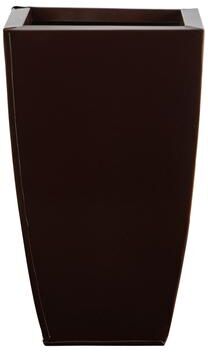
Nearly Natural "15"" Square Tin Planter"Give your plants a new home! This square tin planter pattern injects texture and character to any area. Crafted from high-quality materials for durability, enhance the beauty of your home effortlessly.30,80 $*Shipping: 0,00 $Secure redirect to the provider


-
Between which neighboring natural numbers does the square root lie?
The square root of a natural number lies between its two neighboring natural numbers. For example, the square root of 9 is 3, which lies between 2 and 3. Similarly, the square root of 16 is 4, which lies between 3 and 4. This pattern holds true for all natural numbers and their square roots. **
-
Which natural numbers are between the square root of 65?
The square root of 65 is approximately 8.06. The natural numbers between the square root of 65 are 9 and 10. This is because 9 is the next natural number greater than the square root of 65, and 10 is the natural number after 9. Therefore, the natural numbers between the square root of 65 are 9 and 10. **
-
Between which natural numbers lies the square root of 60?
The square root of 60 lies between 7 and 8. This is because 7^2 = 49 and 8^2 = 64. Since 60 is between 49 and 64, the square root of 60 must be between 7 and 8. **
-
Between which natural numbers lies the square root of 20?
The square root of 20 lies between 4 and 5. This is because 4 squared is 16, and 5 squared is 25. Therefore, the square root of 20 is between 4 and 5. **

Between which natural numbers lies the square root of 21?
The square root of 21 lies between 4 and 5. This is because 4^2 = 16 and 5^2 = 25, so the square root of 21 must be between these two numbers. Therefore, the square root of 21 is approximately 4.58. **
Is the square root a natural number or a fraction?
The square root of a natural number may or may not be a natural number. For example, the square root of 4 is 2, which is a natural number, but the square root of 5 is not a natural number, it is an irrational number. However, the square root of a perfect square will always be a natural number, and the square root of a non-perfect square will be an irrational number or a fraction. Therefore, the square root can be a natural number or a fraction, depending on the number being squared. **
Top-Angebote
Products related to Nearly-Natural-15-Square:
-
Nearly Natural "15"" Square Tin Planter"Give your plants a new home! This square tin planter pattern injects texture and character to any area. Crafted from high-quality materials for durability, enhance the beauty of your home effortlessly.33,57 $*Shipping: 0,00 $Secure redirect to the provider
-
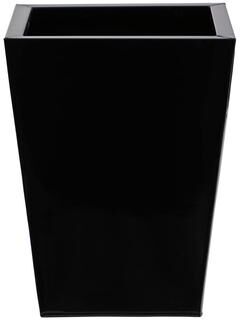
Nearly Natural "13"" Tapered Square Metal Planter"Enhance your home with a metal patterned planter. This chic geometric pot will add texture, depth and color to any space that needs an elegant touch. House your favorite Fiddle, Ficus, or Palm tree for an updated, modern look.32,49 $*Shipping: 0,00 $Secure redirect to the provider
-
What is the original number if you add 15 to the square of a natural number and get the square of the next natural number?
Let's call the original number "x." According to the given information, we have the equation x + 15 = (x+1)^2. To solve for x, we can expand the right side of the equation to get x + 15 = x^2 + 2x + 1. Rearranging the terms, we get x^2 - x - 14 = 0. This is a quadratic equation that can be solved using the quadratic formula. After solving for x, we find that the original number is 4. **
-
What is the square root of 15?
The square root of 15 is approximately 3.87298. This means that when you multiply 3.87298 by itself, the result is approximately 15. The square root of a number is the value that, when multiplied by itself, gives the original number. **
-
Between which neighboring natural numbers does the square root lie?
The square root of a natural number lies between its two neighboring natural numbers. For example, the square root of 9 is 3, which lies between 2 and 3. Similarly, the square root of 16 is 4, which lies between 3 and 4. This pattern holds true for all natural numbers and their square roots. **
-
Which natural numbers are between the square root of 65?
The square root of 65 is approximately 8.06. The natural numbers between the square root of 65 are 9 and 10. This is because 9 is the next natural number greater than the square root of 65, and 10 is the natural number after 9. Therefore, the natural numbers between the square root of 65 are 9 and 10. **
Similar search terms for Nearly-Natural-15-Square
-
"Nearly Natural 15"" Boxwood Ball Preserved Plant in Planter - Green"Enhance even the smallest of spaces with this preserved plant showcasing a single ball, perfectly manicured and designed with realistic boxwood foliage in bright, vivid hues.132,52 $*Shipping: 0,00 $Secure redirect to the provider
-
Nearly Natural "15"" Square Tin Planter"Give your plants a new home! This square tin planter pattern injects texture and character to any area. Crafted from high-quality materials for durability, enhance the beauty of your home effortlessly.30,80 $*Shipping: 0,00 $Secure redirect to the provider
-
Nearly Natural "13"" Classic Square Metal Planter"Enhance your home with a metal patterned planter. This chic geometric pot will add texture, depth and color to any space that needs an elegant touch. House your favorite Fiddle, Ficus, or Palm tree for an updated, modern look.32,29 $*Shipping: 0,00 $Secure redirect to the provider
-
Nearly Natural "13"" Classic Square Metal Planter"Enhance your home with a metal patterned planter. This chic geometric pot will add texture, depth and color to any space that needs an elegant touch. House your favorite Fiddle, Ficus, or Palm tree for an updated, modern look.34,19 $*Shipping: 0,00 $Secure redirect to the provider
-
Between which natural numbers lies the square root of 60?
The square root of 60 lies between 7 and 8. This is because 7^2 = 49 and 8^2 = 64. Since 60 is between 49 and 64, the square root of 60 must be between 7 and 8. **
-
Between which natural numbers lies the square root of 20?
The square root of 20 lies between 4 and 5. This is because 4 squared is 16, and 5 squared is 25. Therefore, the square root of 20 is between 4 and 5. **
-
Between which natural numbers lies the square root of 21?
The square root of 21 lies between 4 and 5. This is because 4^2 = 16 and 5^2 = 25, so the square root of 21 must be between these two numbers. Therefore, the square root of 21 is approximately 4.58. **
-
Is the square root a natural number or a fraction?
The square root of a natural number may or may not be a natural number. For example, the square root of 4 is 2, which is a natural number, but the square root of 5 is not a natural number, it is an irrational number. However, the square root of a perfect square will always be a natural number, and the square root of a non-perfect square will be an irrational number or a fraction. Therefore, the square root can be a natural number or a fraction, depending on the number being squared. **
* All prices are inclusive of VAT and, if applicable, plus shipping costs. The offer information is based on the details provided by the respective shop and is updated through automated processes. Real-time updates do not occur, so deviations can occur in individual cases. ** Note: Parts of this content were created by AI.