Buy 3dlab.eu ?
We are moving the project
3dlab.eu .
Are you interested in purchasing the domain
3dlab.eu ?
domain@kv-gmbh.de · 0541-91531010
Buy 3dlab.eu ?
Should the egoism of human-centered thinking be replaced by the holistic approach of ecocentric design and thinking?
Yes, the egoism of human-centered thinking should be replaced by the holistic approach of ecocentric design and thinking. Ecocentric design and thinking consider the interconnectedness of all living beings and the environment, and prioritize the well-being of the entire ecosystem. This approach is essential for addressing the current environmental crisis and promoting sustainable development. By shifting towards ecocentric design and thinking, we can better protect and preserve the natural world for future generations. **
Is this still politics, instead of logical thinking emotional thinking?
While emotions can play a role in politics, it is ultimately a field that requires a balance of logical thinking and emotional intelligence. Political decisions are often based on a combination of facts, values, and public opinion, making it necessary to consider both rational arguments and emotional responses. Therefore, it is important for politicians and citizens alike to engage in critical thinking and thoughtful analysis when navigating political issues. **

Similar search terms for Thinking
Top-Angebote
Products related to Thinking:
-
Uplift Picks Kids Math Puzzle Game Logical Thinking Educational Brain Teaser Toy Kids Math Puzzle Game Logical Thinking Educational Brain Teaser ToyMake learning exciting and interactive with this engaging kids math puzzle game designed to boost your childs thinking skills. This fun and challenging logical thinking toy for kids encourages problemsolving through handson play. With numberbased...75,00 $*Shipping: 0,00 $Secure redirect to the provider
-
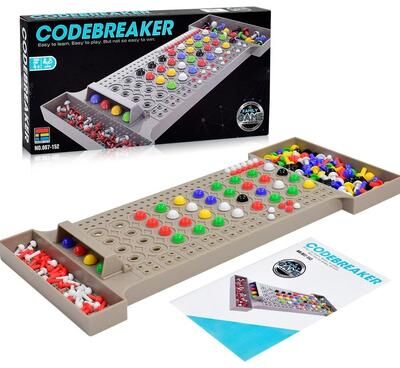
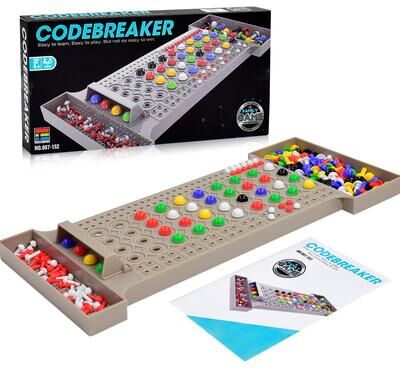
Multisell Products Hub Children Educational Puzzle Game Logical Thinking, Calculation & Password Cracking Toy Children Educational Puzzle Game Logical Thinking, Calculation & Password Cracking ToyUnlock your child's potential with this Childrens Educational Puzzle Game, designed to foster logical thinking and improve calculation skills. This fun and interactive toy not only promotes intellectual development but also strengthens...34,97 $*Shipping: 0,00 $Secure redirect to the provider
-
Uplift Picks Huarong Road LCD Sliding Puzzle Magnetic Logic Thinking Toy For Kids Huarong Road LCD Sliding Puzzle Magnetic Logic Thinking Toy For KidsChallenge the mind and calm the senses with a Huarong Road puzzle that blends classic logic with modern design. This LCD sliding puzzle invites kids to think critically as they move magnetic blocks to solve increasingly tricky layouts. Compact and...134,50 $*Shipping: 0,00 $Secure redirect to the provider
-
Hi-Line Gift Blue Muse: Pensive Polyresin Thinking Gnome FigurineInfuse your outdoor space with whimsy and contemplation with Blue Muse - a pensive polyresin thinking gnome figurine duo. Crafted for the outdoors, these figurines add a touch of curiosity and charm to gardens, patios, or any outdoor haven.79,49 $*Shipping: 0,00 $Secure redirect to the provider


-
What is the definition of hypothetical-deductive thinking and deductive thinking?
Hypothetical-deductive thinking is a problem-solving approach that involves creating a hypothesis or educated guess about a situation and then testing it through deductive reasoning. Deductive thinking, on the other hand, is a logical process where one starts with a general statement or hypothesis and then examines the possibilities to reach a specific, logical conclusion. In essence, hypothetical-deductive thinking combines the generation of hypotheses with deductive reasoning to arrive at a solution, while deductive thinking focuses solely on drawing specific conclusions from general principles. **
-
What is the definition of hypothetico-deductive thinking and deductive thinking?
Hypothetico-deductive thinking is a scientific method that involves formulating a hypothesis and then testing it through observation and experimentation to reach a conclusion. It is a process of making educated guesses and then systematically testing them to determine their validity. Deductive thinking, on the other hand, is a logical process where conclusions are drawn based on a set of premises or assumptions. It involves reasoning from general principles to specific instances to reach a logical conclusion. **
-
What other types of thinking exist besides spatial and visual thinking?
Besides spatial and visual thinking, other types of thinking include analytical thinking, which involves breaking down complex problems into smaller, more manageable parts; critical thinking, which involves evaluating and analyzing information in a logical and systematic way; and creative thinking, which involves generating new and innovative ideas and solutions. Additionally, there is also abstract thinking, which involves understanding and conceptualizing ideas that are not necessarily tied to concrete objects or experiences. These different types of thinking can be used in combination to approach problems and tasks from various angles and perspectives. **
-
What is liberal thinking?
Liberal thinking is a political and social ideology that emphasizes individual rights, equality, and freedom. It values progress, tolerance, and open-mindedness, and often advocates for government intervention to address social and economic inequalities. Liberals typically support policies that promote diversity, environmental protection, and social welfare programs. Overall, liberal thinking prioritizes the well-being and autonomy of individuals within a society. **
![Cornerstone [HARDCOVER] Clear Thinking: Turning Ordinary Moments into Extraordinary Results](https://cdn.adindex.com/oimg/7e612691-51e7-4556-9666-2890015b6835)
Can one stop thinking?
It is not possible to completely stop thinking as the mind is constantly active, even during periods of rest or sleep. However, one can practice mindfulness and meditation techniques to quiet the mind and reduce the frequency of thoughts. By focusing on the present moment and letting go of distractions, one can experience moments of mental stillness and clarity. **
What is Buddhist thinking?
Buddhist thinking is a philosophical and spiritual tradition that originated in ancient India and is based on the teachings of Siddhartha Gautama, also known as the Buddha. Central to Buddhist thinking is the belief in the Four Noble Truths, which outline the nature of suffering and the path to its cessation. Buddhists also emphasize the practice of mindfulness, compassion, and non-attachment as a means to achieve enlightenment and liberation from the cycle of birth and death. Overall, Buddhist thinking encourages self-awareness, ethical conduct, and the cultivation of wisdom to attain inner peace and ultimate freedom from suffering. **
Top-Angebote
Products related to Thinking:
-
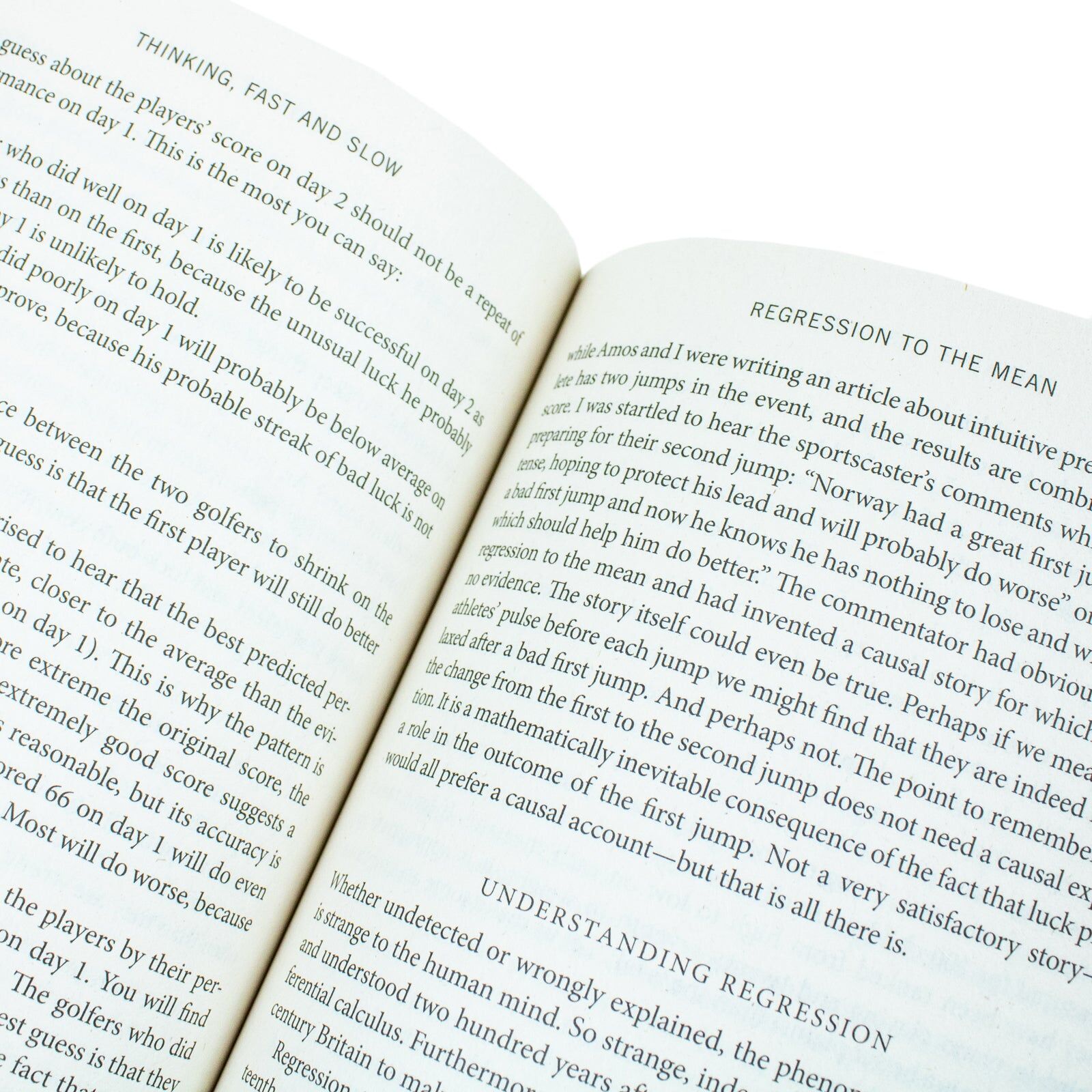
Penguin Thinking, Fast and Slow by Daniel KahnemanWhy is there more chance we'll believe something if it's in a bold type face? Why are judges more likely to deny parole before lunch? Why do we assume a good-looking person will be more competent? The answer lies in the two ways we make choices: fast, intuitive thinking, and slow, rational thinking. This book reveals how our minds are tripped up by error and prejudice (even when we think we are being logical), and gives you practical techniques for slower, smarter thinking. It will enable to you make better decisions at work, at home, and in everything you do.7,99 £*Shipping: 2,99 £Secure redirect to the provider
-
Uplift Picks Kids Math Puzzle Game Logical Thinking Educational Brain Teaser Toy Kids Math Puzzle Game Logical Thinking Educational Brain Teaser ToyMake learning exciting and interactive with this engaging kids math puzzle game designed to boost your childs thinking skills. This fun and challenging logical thinking toy for kids encourages problemsolving through handson play. With numberbased...75,00 $*Shipping: 0,00 $Secure redirect to the provider
-
Multisell Products Hub Children Educational Puzzle Game Logical Thinking, Calculation & Password Cracking Toy Children Educational Puzzle Game Logical Thinking, Calculation & Password Cracking ToyUnlock your child's potential with this Childrens Educational Puzzle Game, designed to foster logical thinking and improve calculation skills. This fun and interactive toy not only promotes intellectual development but also strengthens...34,97 $*Shipping: 0,00 $Secure redirect to the provider
-
Should the egoism of human-centered thinking be replaced by the holistic approach of ecocentric design and thinking?
Yes, the egoism of human-centered thinking should be replaced by the holistic approach of ecocentric design and thinking. Ecocentric design and thinking consider the interconnectedness of all living beings and the environment, and prioritize the well-being of the entire ecosystem. This approach is essential for addressing the current environmental crisis and promoting sustainable development. By shifting towards ecocentric design and thinking, we can better protect and preserve the natural world for future generations. **
-
Is this still politics, instead of logical thinking emotional thinking?
While emotions can play a role in politics, it is ultimately a field that requires a balance of logical thinking and emotional intelligence. Political decisions are often based on a combination of facts, values, and public opinion, making it necessary to consider both rational arguments and emotional responses. Therefore, it is important for politicians and citizens alike to engage in critical thinking and thoughtful analysis when navigating political issues. **
-
What is the definition of hypothetical-deductive thinking and deductive thinking?
Hypothetical-deductive thinking is a problem-solving approach that involves creating a hypothesis or educated guess about a situation and then testing it through deductive reasoning. Deductive thinking, on the other hand, is a logical process where one starts with a general statement or hypothesis and then examines the possibilities to reach a specific, logical conclusion. In essence, hypothetical-deductive thinking combines the generation of hypotheses with deductive reasoning to arrive at a solution, while deductive thinking focuses solely on drawing specific conclusions from general principles. **
-
What is the definition of hypothetico-deductive thinking and deductive thinking?
Hypothetico-deductive thinking is a scientific method that involves formulating a hypothesis and then testing it through observation and experimentation to reach a conclusion. It is a process of making educated guesses and then systematically testing them to determine their validity. Deductive thinking, on the other hand, is a logical process where conclusions are drawn based on a set of premises or assumptions. It involves reasoning from general principles to specific instances to reach a logical conclusion. **
Similar search terms for Thinking
-
Uplift Picks Huarong Road LCD Sliding Puzzle Magnetic Logic Thinking Toy For Kids Huarong Road LCD Sliding Puzzle Magnetic Logic Thinking Toy For KidsChallenge the mind and calm the senses with a Huarong Road puzzle that blends classic logic with modern design. This LCD sliding puzzle invites kids to think critically as they move magnetic blocks to solve increasingly tricky layouts. Compact and...134,50 $*Shipping: 0,00 $Secure redirect to the provider
-
Hi-Line Gift Blue Muse: Pensive Polyresin Thinking Gnome FigurineInfuse your outdoor space with whimsy and contemplation with Blue Muse - a pensive polyresin thinking gnome figurine duo. Crafted for the outdoors, these figurines add a touch of curiosity and charm to gardens, patios, or any outdoor haven.79,49 $*Shipping: 0,00 $Secure redirect to the provider
-
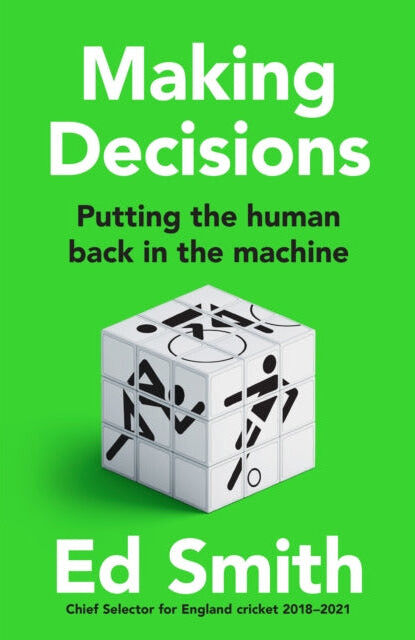
William Collins Making Decisions Book – Leadership, Judgement & Smart Thinking GuideWinning takes many forms. For fans of Matthew Syed, this is a great sports book about leadership, judgement and decision-making - rooted in the theory that helped Ed Smith lead England cricket to sustained success. And to help us all win more.'An absolutely fascinating book' THE GAME, The Times football pod How do you spot the opportunities that others miss?How do you turn a team's performance around?How do you make good decisions amid a tidal wave of information? And how can you improve? As chief selector for the England cricket team, Ed Smith pioneered new methods for building successful teams and watched his decisions tested in real time on the pitch. During his three-year tenure, England averaged 7 wins in every 10 completed matches, better than they have performed before or since. Making Decisions reveals Smith's unique approach to finding success in a fast-changing and increasingly data-reliant world.The best decisions, Smith argues, rely on a combination of differing kinds of intelligence: from algorithms to intuition. This is a truth that the most successful people know: data cannot account for everything, it must be harnessed with human insight. Whatever the power of data, humans aren't finished yet.Sharing for the first time the tools he introduced as England selector, Smith's book captures the immediacy of life at the sharp end, while also exploring frameworks from the top levels of sports, business and the arts. Decision-making is revealed as a creative enterprise, not a reductive system. Making Decisions offers an invaluable guide for those who want a better framework for developing, explaining and implementing new ideas.18,35 £*Shipping: 2,99 £Secure redirect to the provider
-
Cornerstone [HARDCOVER] Clear Thinking: Turning Ordinary Moments into Extraordinary ResultsWe all want to see the world clearly. The trouble is, we're never taught how. Join Shane Parrish - 'the former spy who helps Wall Street mavens think smarter' (New York Times) - for a masterclass in the art of clear thinking. Drawing on examples ranging from the evolutionary origins of our 'emotion default' to the secret history of the Challenger disaster, Parrish offers powerful mental models to make sense of any situation. And he reveals a simple, actionable method for smarter decision-making, starting today. Along the way, he shows that the secret to mental clarity lies not in how we approach the most high-stakes moments - but in our tiniest, most everyday decisions. It's a simple idea with startling implications: if you clear your head today, you change your life tomorrow.12,89 £*Shipping: 2,99 £Secure redirect to the provider
-
What other types of thinking exist besides spatial and visual thinking?
Besides spatial and visual thinking, other types of thinking include analytical thinking, which involves breaking down complex problems into smaller, more manageable parts; critical thinking, which involves evaluating and analyzing information in a logical and systematic way; and creative thinking, which involves generating new and innovative ideas and solutions. Additionally, there is also abstract thinking, which involves understanding and conceptualizing ideas that are not necessarily tied to concrete objects or experiences. These different types of thinking can be used in combination to approach problems and tasks from various angles and perspectives. **
-
What is liberal thinking?
Liberal thinking is a political and social ideology that emphasizes individual rights, equality, and freedom. It values progress, tolerance, and open-mindedness, and often advocates for government intervention to address social and economic inequalities. Liberals typically support policies that promote diversity, environmental protection, and social welfare programs. Overall, liberal thinking prioritizes the well-being and autonomy of individuals within a society. **
-
Can one stop thinking?
It is not possible to completely stop thinking as the mind is constantly active, even during periods of rest or sleep. However, one can practice mindfulness and meditation techniques to quiet the mind and reduce the frequency of thoughts. By focusing on the present moment and letting go of distractions, one can experience moments of mental stillness and clarity. **
-
What is Buddhist thinking?
Buddhist thinking is a philosophical and spiritual tradition that originated in ancient India and is based on the teachings of Siddhartha Gautama, also known as the Buddha. Central to Buddhist thinking is the belief in the Four Noble Truths, which outline the nature of suffering and the path to its cessation. Buddhists also emphasize the practice of mindfulness, compassion, and non-attachment as a means to achieve enlightenment and liberation from the cycle of birth and death. Overall, Buddhist thinking encourages self-awareness, ethical conduct, and the cultivation of wisdom to attain inner peace and ultimate freedom from suffering. **
* All prices are inclusive of VAT and, if applicable, plus shipping costs. The offer information is based on the details provided by the respective shop and is updated through automated processes. Real-time updates do not occur, so deviations can occur in individual cases. ** Note: Parts of this content were created by AI.